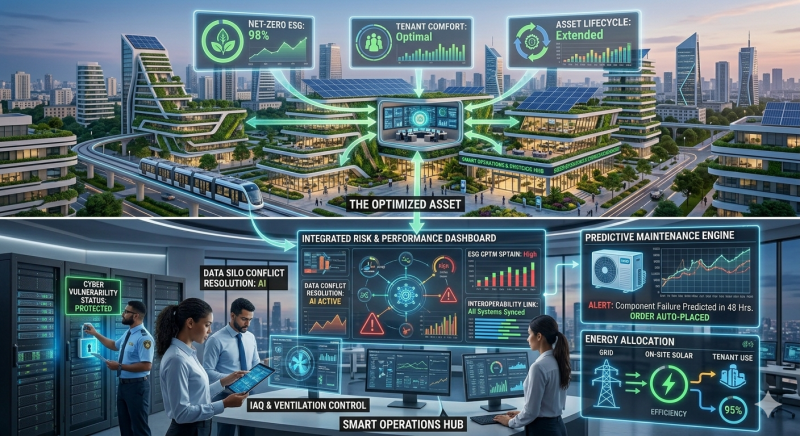
The modern built environment is no longer just about brick and mortar; it is about data, connectivity, and automated intelligence. As urban landscapes grow more complex and resource scarcity becomes a pressing reality, traditional building management methods are proving obsolete. Today, the importance of smart operational systems cannot be overstated. These platforms serve as the brain of modern infrastructure, transforming how we monitor, maintain, and optimize real estate assets.
In this article, we will delve into why smart operational systems are the cornerstone of future property management, their financial and environmental impacts, and how they solve the most critical challenges of modern developments.
What Are Smart Operational Systems?
Before exploring their importance, it is vital to define what they are. A Smart Operational System is an integrated ecosystem of Internet of Things (IoT) sensors, Artificial Intelligence (AI), Building Management Systems (BMS), and cloud-based software.
Instead of operating in silos, these technologies work together to collect real-time data from every corner of a facility—from HVAC units and lighting to security gates and water pipes—and automatically make adjustments to maximize performance.
Why Smart Operational Systems Are Crucial Today
Implementing intelligent operations is no longer a luxury for premium skyscrapers; it is a baseline requirement for any resilient asset. Here is why:
1. Eliminating Human Error and Operational Waste
Traditional building operations rely heavily on manual checks and reactive scheduling. Smart operational systems eliminate this friction.
-
Autonomous Adjustments: If a meeting room is empty, the system automatically dims the lights and lowers the air conditioning, preventing massive energy waste.
-
Unified Dashboards: As illustrated in advanced operational models, having a centralized risk and performance dashboard allows managers to spot data silos and resolve system conflicts instantly.
2. Transitioning from Preventive to Predictive Maintenance
Waiting for a system to break down is expensive, but servicing equipment on a strict calendar basis can also be inefficient.
-
Data-Driven Alerts: Smart systems analyze continuous data streams (vibration, temperature, pressure) to predict exactly when a component will fail.
-
Asset Longevity: By fixing minor anomalies before they cause a total system shutdown, operators drastically extend the lifespan of costly machinery like chillers and elevators.
3. Achieving Aggressive Net-Zero and ESG Targets
Real estate is under intense pressure to decarbonize. Smart operational systems are the most effective tool to achieve green compliance.
-
Carbon Tracking: They provide precise, auditable data on carbon emissions, which is essential for global ESG reporting.
-
Renewable Integration: They seamlessly manage the distribution of power between the traditional grid and on-site renewables like solar panels and battery storage.
Traditional Operations vs. Smart Operational Systems
The strategic contrast between old-school property management and data-driven systems highlights the immediate return on investment:
| Feature | Traditional Building Operations | Smart Operational Systems |
| Data Collection | Manual logs, isolated spreadsheets | Real-time, cloud-integrated dashboards |
| Energy Control | Static timers, manual adjustments | AI-driven, occupancy-based automation |
| Maintenance Cost | High (due to emergency repairs) | Low (minimized via predictive insights) |
| Tenant Experience | Reactive (complaints-driven) | Proactive (optimized comfort & safety) |
Improving the Occupant Experience (The Human Factor)
Beyond numbers, kilobytes, and carbon metrics, the importance of smart operational systems directly extends to human well-being. Modern tenants expect healthy, frictionless workspaces.
-
Indoor Air Quality (IAQ) Control: Advanced systems automatically increase fresh air circulation if CO_2 levels rise in a packed conference room, boosting cognitive function and comfort.
-
Frictionless Access: Integrating smart operational platforms with mobile apps allows touchless entry, streamlined visitor parking, and immediate workplace service requests.
Conclusion: The Backbone of Future Real Estate
The ultimate importance of smart operational systems lies in their ability to turn unpredictable, high-risk buildings into highly efficient, self-optimizing assets. By bridging the gap between physical machinery and digital intelligence, these systems protect properties from depreciation, drastically lower operational costs, and safeguard the environment.
For asset owners and facility managers, the verdict is clear: Investing in smart operational systems is not an expense; it is the ultimate strategy to future-proof your real estate portfolio.