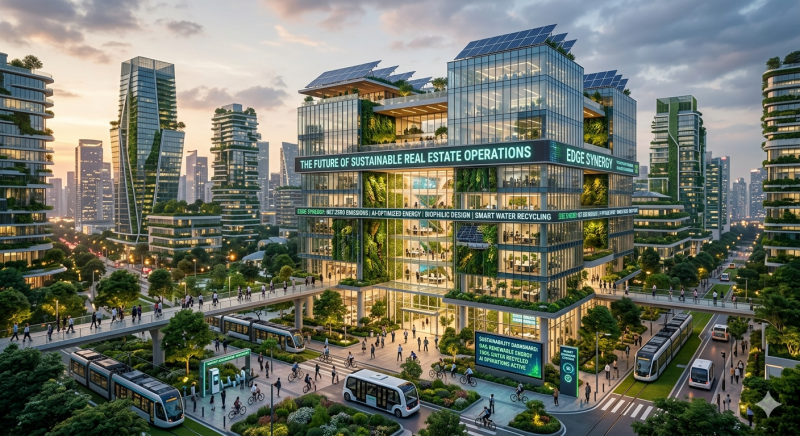
The Future of Sustainable Real Estate Operations: Driving Efficiency and Green Value
The global real estate sector is undergoing a massive paradigm shift. Today, building management is no longer just about maintaining physical structures or cutting leasing deals; it is about survival, resilience, and responsibility. As climate change accelerates and regulatory pressures mount, the future of sustainable real estate operations has transformed from a corporate social responsibility (CSR) trend into a core financial and operational necessity.
In this comprehensive guide, we will explore how sustainable real estate operations are reshaping the industry, the technologies driving this evolution, and how property owners can transition to net-zero operations while maximizing ROI.
Why Sustainable Real Estate Operations Matter Now More Than Ever
Buildings are responsible for approximately 40% of global carbon emissions, split between embodied carbon (materials and construction) and operational carbon (heating, cooling, and powering buildings).
As governments worldwide target net-zero emissions by 2050, the real estate asset class faces strict scrutiny. Transitioning to green operations is no longer optional due to three main drivers:
-
The “Brown Discount” vs. “Green Premium”: Properties with poor energy efficiency are losing asset value (the brown discount), while sustainable buildings command higher rents and stronger tenant retention (the green premium).
-
Tightening Regulations: From Europe’s CSRD to local city mandates (like New York’s Local Law 97), real estate operators face heavy fines if they fail to decarbonize.
-
Tenant Demand: Modern corporate tenants have strict ESG (Environmental, Social, and Governance) targets. They refuse to lease spaces that harm their sustainability metrics.
Key Pillars of Future Sustainable Real Estate Operations
The future of green property management relies on a holistic approach that bridges the gap between technology, human behavior, and nature.
1. AI-Driven Energy Optimization
The smartest building is the one that thinks for itself. PropTech (Property Technology) powered by Artificial Intelligence (AI) and the Internet of Things (IoT) is the backbone of modern operations.
-
Predictive Maintenance: IoT sensors monitor HVAC systems, lighting, and water usage in real-time, fixing inefficiencies before they waste energy.
-
Smart Grids: Buildings are evolving from passive energy consumers to active “prosumers”—generating their own power via solar panels and selling excess energy back to the grid.
2. Decarbonization and Electrification
To achieve net-zero operations, real estate must cut its dependency on fossil fuels.
-
Phasing out Natural Gas: Future-proof buildings are transitioning entirely to electricity, utilizing advanced heat pumps and induction systems.
-
On-site Renewable Energy: Integrating solar facades, wind turbines, and localized battery storage systems directly into the architectural design.
3. Circular Economy and Water Management
Sustainability goes beyond carbon. Waste and water management are critical operational metrics.
-
Smart Water Recycling: Implementing greywater recycling systems to treat water from sinks and showers for use in cooling towers or landscape irrigation.
-
Zero-Waste Operations: Using AI-powered waste sorting and composters to drastically reduce the volume of trash sent to landfills.
4. Biophilic Design and Occupant Well-being
Sustainable operations recognize that human health is tied to environmental health. Incorporating biophilic design—such as living green walls, indoor vertical gardens, and optimized natural daylight—improves indoor air quality and boosts tenant productivity and mental well-being.
The Financial Case: ROI of Green Building Operations
A common misconception is that sustainable operations are prohibitively expensive. In reality, green operations deliver a robust return on investment:
| Operational Metric | Traditional Operations | Sustainable Operations (Future State) |
| Energy Consumption | High volatility, grid-dependent | 30–50% lower costs via AI & solar |
| Asset Valuation | Subject to depreciation & fines | 7–11% higher asset value |
| Tenant Retention | High turnover | Long-term leases with premium tech tenants |
| Regulatory Risk | High vulnerability to carbon taxes | Fully compliant, eligible for green tax incentives |
Overcoming Challenges in the Green Transition
While the path forward is clear, operators face distinct hurdles:
-
The Split Incentive Problem: Landlords often pay for capital upgrades, but tenants reap the rewards of lower utility bills. Solution: The rise of Green Leases, where both parties agree to share the costs and savings of sustainability upgrades.
-
Legacy Building Retrofits: It is easy to build a new sustainable tower, but retrofitting a 50-year-old concrete building is tough. Solution: Phased retrofitting focusing first on insulation, LED lighting, and smart thermostats before moving to heavy machinery replacement.
Conclusion: The Horizon of Real Estate
The future of sustainable real estate operations is a vibrant ecosystem where technology meets ecology. As seen in progressive urban designs globally, tomorrow’s buildings will behave more like living organisms—breathing through natural ventilation, absorbing solar energy, recycling their own water, and keeping their occupants healthy.
For real estate investors, operators, and asset managers, the message is simple: Incorporate sustainability into your operational DNA today, or watch your portfolio become obsolete tomorrow.