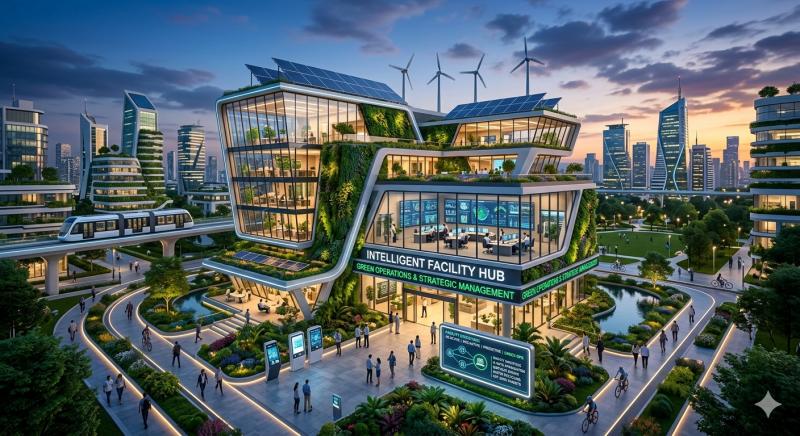
For decades, facility management (FM) was viewed as a background operation—a cost center responsible for fixing broken pipes, changing light bulbs, and ensuring the office was clean. However, the corporate landscape has drastically shifted. Today, the evolution of facility management has elevated the industry from a reactive, tactical service into a data-driven, strategic powerhouse that directly influences corporate profitability, sustainability, and employee well-being.
In this article, we will explore the historical shift of facility management, the technological catalysts driving its transformation, and what the future holds for modern facility managers.
The Historical Timeline: From Reactive to Proactive
To understand where facility management is going, we must look at how far it has come. The evolution can be categorized into three distinct eras:
1. The Reactive Era (1970s – 1990s)
-
Focus: Basic maintenance and firefighting.
-
Operations: Completely manual and paper-based. Facility managers were only called when something broke down (Run-to-Failure model).
-
Perception: A pure overhead expense with no seat at the executive table.
2. The Digitization Era (2000s – 2010s)
-
Focus: Cost reduction and operational efficiency.
-
Operations: Introduction of CAFM (Computer-Aided Facility Management) and CMMS (Computerized Maintenance Management Systems) software. Maintenance shifted from reactive to scheduled preventive maintenance.
-
Perception: A critical operational function focused on optimizing asset lifecycles.
3. The Smart & Strategic Era (2020s and Beyond)
-
Focus: Workplace experience, sustainability, and data intelligence.
-
Operations: Powered by IoT, Artificial Intelligence (AI), and integrated workplace management systems (IWMS).
-
Perception: A core strategic business partner influencing ESG goals, talent retention, and real estate ROI.
Key Drivers Behind the Evolution of Facility Management
The rapid transformation of modern FM is driven by powerful global forces that demand smarter building operations.
1. The Rise of PropTech and Smart Buildings
The integration of the Internet of Things (IoT) has turned buildings into living data sources. Modern facility managers no longer guess when an HVAC system needs servicing. Smart sensors monitor vibration, temperature, and airflow, enabling predictive maintenance—fixing anomalies before a breakdown even occurs.
2. The Hybrid Work Revolution
The traditional 9-to-5 office model has changed. Facility managers now face unpredictable occupancy levels. To counter this, modern FM utilizes spatial analytics to track real-time desk and meeting room utilization. This data allows companies to downsize space, reconfigure layouts for collaboration, and scale down energy use on low-occupancy days.
3. ESG and Corporate Sustainability
As discussed in comprehensive sustainability frameworks and visually represented in green operational models, facilities are on the frontline of the climate battle. Modern facility management is heavily judged on carbon footprint reduction, zero-waste initiatives, and energy optimization.
Traditional vs. Next-Generation Facility Management
The shift in day-to-day operations can be summarized by how technology and strategy have replaced manual guesswork:
| Operational Metric | Traditional Facility Management | Next-Gen Facility Management |
| Maintenance Strategy | Reactive (Fix when broken) | Predictive (AI-driven alerts) |
| Data Utilization | Siloed spreadsheets / Paper logs | Integrated Cloud Dashboards (IWMS) |
| Energy Management | Manual thermostat adjustments | Automated Building Management Systems (BMS) |
| Core Objective | Maintain physical assets | Maximize human experience & asset value |
Human-Centric FM: Focusing on the Workplace Experience
One of the most profound shifts in the evolution of facility management is the focus on the employee experience. Modern FM is no longer just about managing buildings; it is about managing the experience of the people inside them.
-
Indoor Environmental Quality (IEQ): Monitoring air quality, humidity, and natural lighting to maximize cognitive function and health.
-
Frictionless Workplaces: Implementing touchless access, smart parking apps, and digital service desks where employees can request maintenance or book workspaces seamlessly.
Conclusion: The Facility Manager as a Chief Strategy Partner
The evolution of facility management has fundamentally rewritten the job description. The modern facility manager is part data scientist, part hospitality expert, and part sustainability champion.
As buildings become more complex and businesses place higher premiums on sustainability and employee wellness, the organizations that invest in advanced, strategic facility management will thrive, while those stuck in the reactive past will face soaring operational costs and obsolete infrastructure.