The real estate and urban development sector is moving at a breakneck pace. Driven by technological leaps, urgent climate targets, and shifting demographic needs, today’s projects look vastly different from those built just a decade ago. However, building the future is far from easy.
From regulatory hurdles to supply chain vulnerabilities, developers today face an unprecedented matrix of obstacles. Understanding the core challenges facing modern developments is crucial for investors, project managers, and architects who want to deliver resilient, future-proof assets.
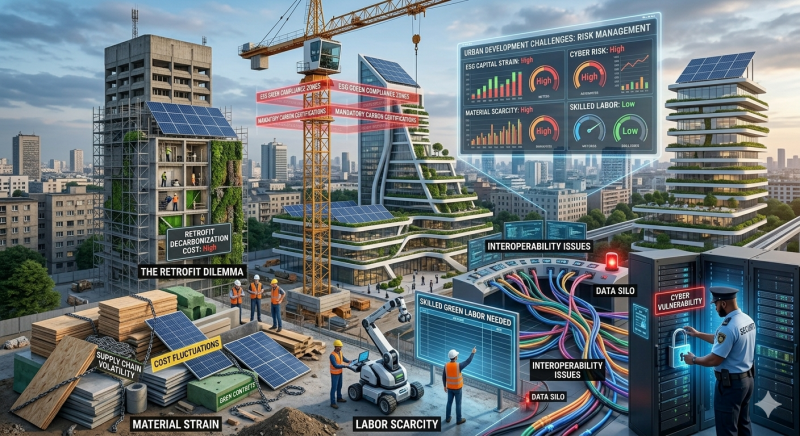
1. The Financial Strain of Decarbonization & Green Compliance
While the transition to sustainable operations—as seen in integrated hubs is the ultimate goal, the initial financial and regulatory path is highly challenging.
-
High Upfront Capital (CapEx): Integrating renewable energy sources, smart building envelopes, and advanced water-recycling systems significantly raises initial construction costs.
-
Strict ESG Regulations: Governments worldwide are enforcing strict carbon caps. Navigating changing local laws, green certifications (like LEED or BREEAM), and carbon taxes requires immense legal and operational effort.
-
The “Retrofit Dilemma”: For developers dealing with existing portfolios, bringing legacy structures up to modern eco-standards is often more expensive and complex than building from scratch.
2. Technological Fragmentation and Cyber Vulnerabilities
As modern developments morph into data-driven “smart cities,” their reliance on PropTech presents a dual-edged sword.
-
Interoperability Issues: A major challenge in smart buildings is getting different systems to talk to each other. Elevators, HVAC, lighting, and security often run on proprietary software from different vendors, creating data silos.
-
Cybersecurity Threats: Every IoT sensor, smart thermostat, and automated access point is a potential entry gate for hackers. Modern developments are increasingly becoming targets for cyberattacks, making data privacy and network security an expensive, non-negotiable operational cost.
3. Supply Chain Volatility and Material Scarcity
The global supply chain remains fragile, posing a direct threat to project timelines and budgets.
-
Fluctuating Material Costs: The prices of essential sustainable building materials, specialized microchips for smart infrastructure, and eco-friendly concrete can fluctuate wildly.
-
Scarcity of Skilled Labor: Constructing and managing an advanced facility requires specialized skills. There is a global shortage of engineers, green architects, and data-literate facility managers capable of operating next-gen building management systems (BMS).
Modern vs. Traditional Development Challenges
The challenges of the past were mostly physical; today’s challenges are systemic, digital, and environmental.
| Development Aspect | Traditional Challenges | Modern Development Challenges |
| Primary Risk | Structural delays & manual labor shortages | Cybersecurity breaches & compliance fines |
| Supply Chain | Localized material availability | Global microchip & green material scarcity |
| Design Priority | Maximizing square footage | Maximizing energy efficiency & occupant wellness |
| Data Management | Minimal (Paper blue prints) | Massive (IoT data silos & cloud security) |
4. Adapting to Shifting Demographics and the Hybrid Work Model
Modern developments must cater to a completely transformed urban lifestyle.
-
The Decline of Predictable Occupancy: The rise of hybrid work means commercial buildings face erratic foot traffic. Designing flexible spaces that can seamlessly pivot between high-density collaborative hubs and low-energy quiet zones is an ongoing architectural challenge.
-
The Demand for Health and Wellness: Post-pandemic tenants expect premium Indoor Environmental Quality (IEQ). Incorporating complex biophilic designs, advanced HEPA filtration systems, and touchless journeys complicates both the design phase and daily operations.
Conclusion: Turning Challenges into Competitive Advantages
The challenges facing modern developments are undeniably complex, but they are not insurmountable. The developers who will lead the next era of real estate are those who view these hurdles not as roadblocks, but as opportunities to innovate.
By embracing integrated PropTech early, forming flexible supply networks, and embedding ESG targets into the very first blueprint, modern developments can mitigate these risks—ultimately delivering high-value, resilient assets that stand the test of time.